


Well+Being Holistic Mental Health
Emotional Health & Wellness Tips From The Therapy Couch And Other Places
The information provided on this website is for educational purposes only and is not a substitute for professional medical advice, diagnosis, or treatment. Always consult a trusted qualified healthcare professional regarding any medical or mental health-related concerns. 
Lifestyle Changes To Reduce Chronic Pain, Inflammation And Depression
Understanding the Link Between Depression, Inflammation, and Mind-Body Healing
As a holistic psychotherapist in New York City, I frequently work with high-functioning professionals, creatives, and individuals navigating emotional and physical symptoms that overlap. Many clients come to therapy reporting concerns such as fatigue, low energy, insomnia, body aches, loss of interest in daily activities, reduced libido, social withdrawal, and appetite changes.
While these symptoms often resemble depression, the underlying cause isn’t always psychological. Chronic inflammation and physiological stress can also manifest as mood changes and emotional distress. At Holistic Psychotherapy & Wellness NY, I take an integrative approach—helping clients address emotional pain while exploring contributing physical and lifestyle factors.
What Is the Connection Between Depression and Inflammation?
Emerging research reveals a strong, bidirectional relationship between inflammation and depression. According to the American Journal of Psychiatry, chronic inflammation can contribute to depressive symptoms—and depression itself may activate inflammatory processes in the body.
Inflammation plays a role in several chronic health conditions, including:
Type 2 diabetes
Cardiovascular disease
Metabolic syndrome
Rheumatoid arthritis
Multiple sclerosis
Asthma
Psoriasis
Chronic pain syndromes
These conditions are also associated with an increased risk of depression and anxiety.
What Causes Chronic Inflammation?
Inflammation is the body’s natural response to injury, trauma, or infection. However, when inflammation becomes chronic or systemic, it can create a cascade of physical and emotional health problems. Contributing factors include:
Chronic stress and elevated cortisol
Poor diet and blood sugar instability
Hormonal imbalances
Food allergies and intolerances
Environmental toxins
Hidden infections
Sleep deprivation
Over- or under-exercising
If you experience persistent depressive symptoms, pain, or fatigue—and lab markers such as C-reactive protein (CRP) are elevated—it may be time to address inflammation as part of your wellness plan.

What’s on Your Not-To-Do List? How Letting Go May Be the Key to Feeling Better
While reading a thoughtful article on Lifehacks, I was reminded of just how much pride we take in our daily to-do lists—and how deeply modern culture, particularly here in New York City, worships at the altar of productivity. We’re a society of movers and shakers. Our calendars are full, our inboxes overflowing, and we often measure self-worth by what we’ve accomplished by the end of the day.
But here’s a gentle reframe worth considering:
What if feeling better—more grounded, more content, even happier—wasn’t about doing more, but about doing less?
This article introduced a refreshing concept: the Not-To-Do List. Instead of optimizing every moment for efficiency, this list invites us to look inward and ask:
What am I doing—mentally, emotionally, behaviorally—that’s contributing to my unhappiness?
It’s a powerful question. And one that brings many people to therapy.
Why Therapy Often Begins With Unlearning
As a therapist working with high-functioning individuals, I often hear a version of this:
“I just want to feel better.”
But feeling better isn’t just about goals or action steps—it’s often about identifying the hidden habits and mental scripts that are making life harder than it needs to be.
We rarely pause to take inventory of the things we do automatically—judgmental self-talk, perfectionism, emotional avoidance, people-pleasing, numbing behaviors—that, over time, chip away at our capacity for joy, peace, and connection.
The Lifehacks article suggests something radical: Start your emotional healing by creating a personal list of habits that generate misery. Then, ask yourself honestly:
How are these behaviors serving me—and what might it feel like to gently let them go?
Therapy Techniques That Help You Break Free From Self-Defeating Patterns

Tired of All-or-Nothing Thinking? How Embracing the Middle Path Can Transform Your Life
Do you find yourself thinking in extremes? Are you someone who struggles with "all or nothing" thinking because sitting with conflicting emotions feels overwhelming? If so, you're not alone.
For many people, ambivalence—the experience of having mixed or contradictory feelings—is profoundly uncomfortable. We crave certainty, clarity, and a sense of control. Feeling torn can be anxiety-inducing. But in reality, ambivalence is a normal, healthy emotional state, and learning to tolerate it is a powerful skill that fosters resilience, flexibility, and emotional intelligence.
In dialectical behavior therapy (DBT), this process is known as walking the Middle Path—a practice that invites both acceptance and change. When we learn to hold space for opposing truths, we move toward balance, emotional maturity, and greater well-being.
What Is Ambivalence And Why Is It So Uncomfortable?
Ambivalence is the simultaneous presence of conflicting feelings—loving someone and feeling frustrated with them, wanting change but fearing what it might bring, feeling both hopeful and uncertain. Most people try to resolve ambivalence quickly, choosing one side over the other in an attempt to reduce inner tension.
But the truth is, trying to force clarity before it’s ready can lead to impulsive decisions, emotional reactivity, and chronic dissatisfaction. The path to greater peace often begins by learning to tolerate the discomfort of the "gray zone."
How The Middle Path Can Help You Break Free From Black-And-White Thinking
If you struggle with rigid thinking or emotional extremes, the following strategies can help you begin to embrace more nuance, flexibility, and inner calm.

Shyness, Social Anxiety, and the Hidden Toll of Coping with Alcohol: A NYC Therapist’s Perspective
Do you find yourself thinking in extremes? Are you someone who struggles with "all or nothing" thinking because sitting with conflicting emotions feels overwhelming? If so, you're not alone.
For many people, ambivalence—the experience of having mixed or contradictory feelings—is profoundly uncomfortable. We crave certainty, clarity, and a sense of control. Feeling torn can be anxiety-inducing. But in reality, ambivalence is a normal, healthy emotional state, and learning to tolerate it is a powerful skill that fosters resilience, flexibility, and emotional intelligence.
In dialectical behavior therapy (DBT), this process is known as walking the Middle Path—a practice that invites both acceptance and change. When we learn to hold space for opposing truths, we move toward balance, emotional maturity, and greater well-being.
What Is Ambivalence And Why Is It So Uncomfortable?
Ambivalence is the simultaneous presence of conflicting feelings—loving someone and feeling frustrated with them, wanting change but fearing what it might bring, feeling both hopeful and uncertain. Most people try to resolve ambivalence quickly, choosing one side over the other in an attempt to reduce inner tension.
But the truth is, trying to force clarity before it’s ready can lead to impulsive decisions, emotional reactivity, and chronic dissatisfaction. The path to greater peace often begins by learning to tolerate the discomfort of the "gray zone."
How The Middle Path Can Help You Break Free From Black-And-White Thinking
If you struggle with rigid thinking or emotional extremes, the following strategies can help you begin to embrace more nuance, flexibility, and inner calm.

Radical Acceptance: Cultivating Peace Within When Life Feels Unbearable
This week in my eating disorder seminar, we revisited the concept of distress tolerance—the quiet, powerful skills we call upon when emotions feel overwhelming. As we explored how to navigate emotional intensity, I found myself reflecting on one of the most grounding practices we have: radical acceptance.
In a culture that urges us to fight, fix, or fake our feelings, radical acceptance invites something entirely different. It asks us to soften. To lean into the truth of what is, without judgment or resistance. It doesn’t mean we approve of pain or give up hope. It means we stop fighting reality—and begin meeting ourselves with compassion and clarity.
What Does Radical Acceptance Look Like?
Choosing to accept, fully and from within
True acceptance isn’t performative or forced. It’s not bypassing, and it’s not pretending. It comes from within, and it begins with the willingness to be honest about what’s here.Recognizing that pain is part of being human
Every one of us experiences fear, sorrow, grief, shame, and heartbreak. These emotions are not flaws. They are evidence of aliveness. When we stop judging our pain, we begin to suffer less.Stopping the fight against reality
Resisting emotions often amplifies them. Avoiding pain often deepens our distress. Radical acceptance helps us release the exhausting need to control what cannot be controlled. And in doing so, we begin to make space for peace.
It’s not the emotion itself that overwhelms us. It’s the struggle against it.
Improving the Moment: Skills from DBT Therapy
When radical acceptance feels out of reach, distress tolerance skills from Dialectical Behavior Therapy (DBT) can help us get through the moment without making things worse. One helpful acronym is IMPROVE, which offers small, doable strategies to shift your state and calm your nervous system.
Imagery
Visualize a safe or peaceful place. Allow yourself to engage all your senses. Imagine what you see, hear, smell, and feel in that space. Let your body respond as if it were real.
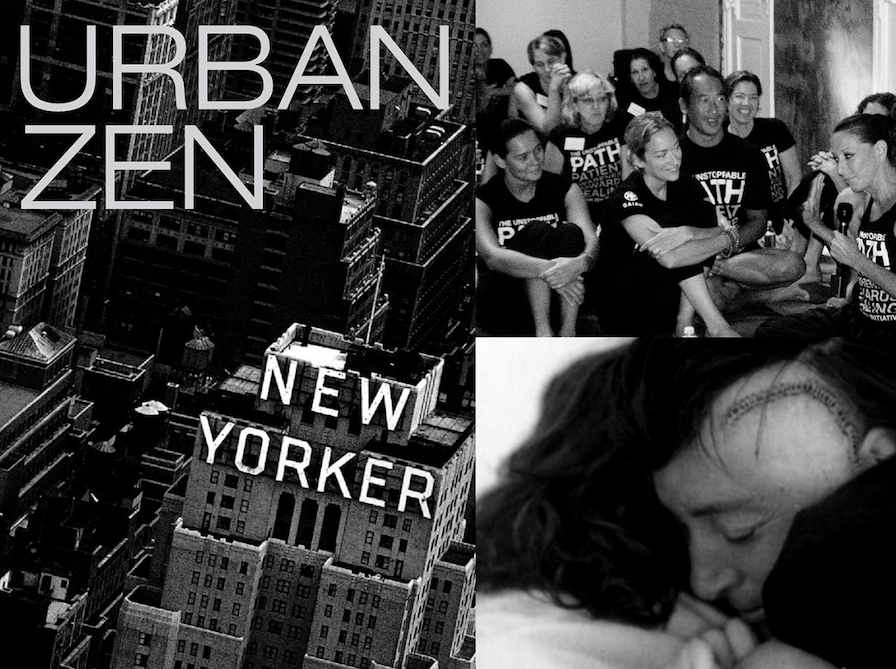
Urban Zen Center: Dr. Mark Hyman Speaks On Diabesity
(by Kim Seelbrede, originally posted on urbanzen.org, Nov 10, 2010)
Mark Hyman, MD Returns to Urban Zen: A Functional Medicine Approach to Reversing Diabesity and Chronic Disease
The Urban Zen Center was honored to welcome back Mark Hyman, MD, a visionary leader in functional medicinewho lovingly refers to Urban Zen as his "second home." On October 30, 2010, a packed studio gathered in the heart of New York City’s West Village for a full-day workshop on one of the most urgent health crises of our time: Diabesity—a metabolic epidemic at the intersection of obesity, insulin resistance, and type 2 diabetes.
Dr. Hyman, a best-selling author and founder of The UltraWellness Center, delivered a compelling, science-backed message: chronic disease is not inevitable—and it is often reversible through lifestyle and systems-based medicine.
Understanding Diabesity: A National Health Crisis
“Diabesity” is the term Dr. Hyman uses to describe a spectrum of metabolic dysfunction that ranges from mild blood sugar imbalances to full-blown type 2 diabetes. And the numbers are staggering:
Nearly 3 out of 4 Americans are classified as overweight or obese.
1 in 3 military volunteers is considered unfit for service due to obesity.
Children today may be the first generation not expected to outlive their parents.
This epidemic isn’t just a public health concern—it’s been labeled a national security threat by military leaders.
Dr. Hyman challenged us to rethink what we’ve been told about health and disease. The problem, he explained, is not genetic fate or bad luck—it’s the failure of conventional medicine to address the root causes of chronic disease. Instead of masking symptoms, we must treat the whole system. That’s where functional medicine steps in.
Functional Medicine: Treating Root Causes, Not Just Symptoms
Throughout the day, Dr. Hyman introduced key concepts that underpin his functional medicine approach, including:
Epigenetics & Nutrigenomics: We may carry genes for disease, but lifestyle choices can influence whether those genes are expressed. By addressing nutrient intake, inflammation, and cellular stress, we can “turn down” harmful genes and “turn up” healing ones.

Feeling Overwhelmed by Therapy Options? Here’s How to Find the Right Fit for You
Making the decision to begin therapy is a significant and empowering step. But for many in New York City—where therapy options seem endless—the process of choosing the “right” therapist can feel overwhelming, even paralyzing. Whether you’re seeking therapy for yourself, your relationship, or your family, understanding the landscape of available approaches can make all the difference.
If you’re unsure where to begin, a helpful resource is The Huffington Post's article on different types of therapy, which offers an introductory look at several major modalities: Psychodynamic Psychotherapy, Cognitive Behavioral Therapy (CBT), Dialectical Behavior Therapy (DBT), Family Therapy, and Group Therapy. While not exhaustive, it’s a useful starting point for understanding how therapy styles align with specific mental health needs.
Therapy Is Not One-Size-Fits-All
At Holistic Therapy & Wellness NY, we frequently hear from individuals and couples who have tried therapy before and felt it “didn’t work.” Often, the issue wasn’t therapy itself—it was a mismatch between their needs and the therapist’s approach.
If you’re struggling with self-defeating or self-sabotaging patterns, Psychoanalytic or Depth Therapy can help uncover unconscious motivations that drive behavior.
If your concerns revolve around anxiety, panic, or trauma, evidence-based treatments like EMDR, Somatic Psychotherapy, and Mindfulness-Based Cognitive Therapy can be transformative.
Couples in conflict should seek a therapist trained in Couples Therapy, ideally using structured methods like the Gottman Method, Emotionally Focused Therapy (EFT), or Imago Relationship Therapy.
For high-achieving professionals, creatives, and public figures in NYC, a discreet, holistic approach that integrates neuroscience, somatic healing, and emotional intelligence is often most effective.
How To Choose The Right Therapist In NYC
While directories like Psychology Today can help you browse local therapists, sometimes a brief phone consultation isn’t enough to make an informed decision. Many of our NYC clients find that a paid consultation with an experienced, licensed psychotherapist provides the clarity needed to choose the best therapeutic path. In these consultations, we explore your goals, challenges, and preferences, and make personalized recommendations tailored to your emotional, relational, and nervous system needs.

Urban Zen Center: How To Avoid The Epidemic Of Obesity And Diabetes
(by Kim Seelbrede, originally posted on Martha Stewart’s wholelivingdaily/wholeliving.org ) Obesity and Diabetes: How to Avoid the Epidemic
Functional Medicine Pioneer Dr. Mark Hyman Speaks at Urban Zen on “Diabesity,” Inflammation, and the Future of Chronic Disease
Last week in the heart of the West Village, the Urban Zen Foundation hosted an inspiring afternoon with functional medicine trailblazer Mark Hyman, MD, who returned to New York to shed light on a fast-growing public health crisis: the epidemic of obesity, insulin resistance, and type 2 diabetes.
Dr. Hyman calls it "Diabesity"—a term he coined to describe the interconnected epidemic of obesity and diabetes that is now affecting nearly 3 out of 4 Americans. His message? Chronic illness is not our destiny. It is, in many cases, reversible—if we stop treating symptoms and begin healing systems.
The Scary Truth: What We’re Really Up Against
By 2050, one in three Americans will be diagnosed with diabetes. But the warning signs begin decades earlier: blood sugar imbalances, high triglycerides, hypertension, insulin resistance, and abnormal cholesterol levels. Left untreated, these symptoms form the foundation of a larger, metabolic breakdown that can lead to:
In a moment that visibly quieted the room, Dr. Hyman warned, “Our children may be the first generation who will not outlive their parents.” The answer, he says, lies in functional medicine—a systems-based approach to healthcare that treats root causes, not just symptoms.
Functional Medicine 101: From Dysfunctional To Functional
When a participant asked about genetic predisposition, Dr. Hyman explained that genes are not destiny. Through lifestyle changes, we can influence gene expression in ways that promote vitality and resilience. This cutting-edge field—known as nutrigenomics—studies how food and lifestyle choices impact our DNA and mitochondria, the tiny powerhouses in each cell responsible for energy production.

Conquering Food Addictions With Dr. Neal Bernard
On a crisp autumn day in the West Village, the Urban Zen Center hosted acclaimed physician and nutrition researcher Dr. Neal Barnard, founder of the Physicians Committee for Responsible Medicine. The focus of the event? Winning weight battles, curbing food cravings, and reversing chronic disease through the power of a plant-based diet.
Titled “Winning Weight Battles and Conquering Cravings,” the six-hour workshop offered guests a rich blend of nutrition science, practical strategies, and mouthwatering vegan food demonstrations—all centered on addressing the epidemic of food addiction and the growing burden of lifestyle-related disease in America.
Food Addiction And The Brain: The Science Behind The Cravings
Dr. Barnard explained that common comfort foods—especially cheese, chocolate, meat, and sugar—can trigger addictive responses in the brain. These foods stimulate the release of dopamine, the brain’s “feel-good” neurotransmitter, through mechanisms similar to those seen in substance addiction.
When we consume these foods regularly, the brain learns to associate them with reward and pleasure, making it difficult to resist cravings. This neurological loop can lead to overeating, weight gain, insulin resistance, and increased risk for chronic conditions like diabetes, heart disease, and even depression.
According to Dr. Barnard, the food industry, backed by government subsidies and aggressive marketing, capitalizes on this natural craving response—creating a cycle that’s hard to break without intentional dietary change.